
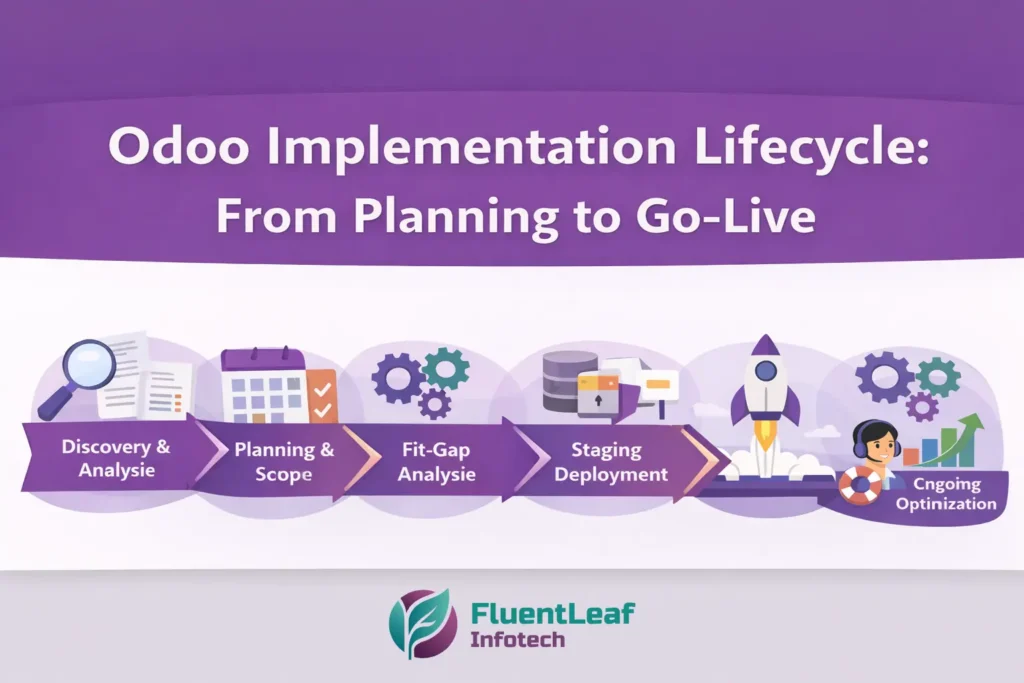
Implementing Odoo ERP is not just a technical setup; it is a structured business transformation process. Organizations that follow a defined Odoo implementation life cycle achieve faster adoption, lower customization costs, and smoother long-term scalability.
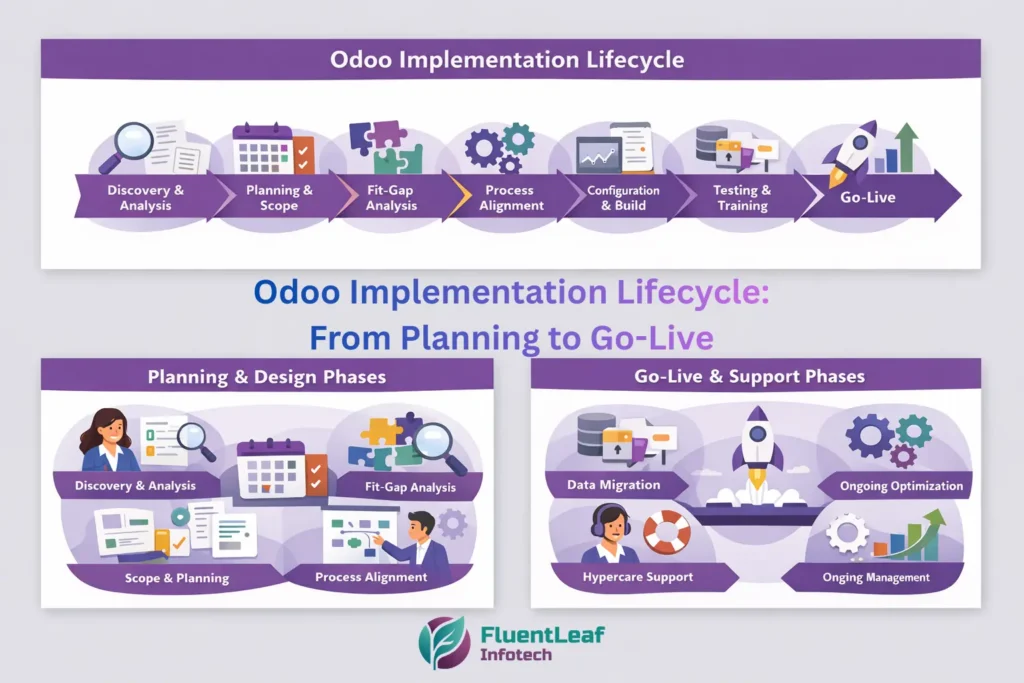
This step-by-step guide explains the Odoo implementation lifecycle, grouped into three major phases: Planning & Design, Implementation & Validation, and Go-Live & Support.
Phase 1: Planning and Design Phases
The planning and design phase builds the foundation for a successful Odoo ERP implementation. The objective is to understand business needs and design a solution that uses maximum standard Odoo capabilities.
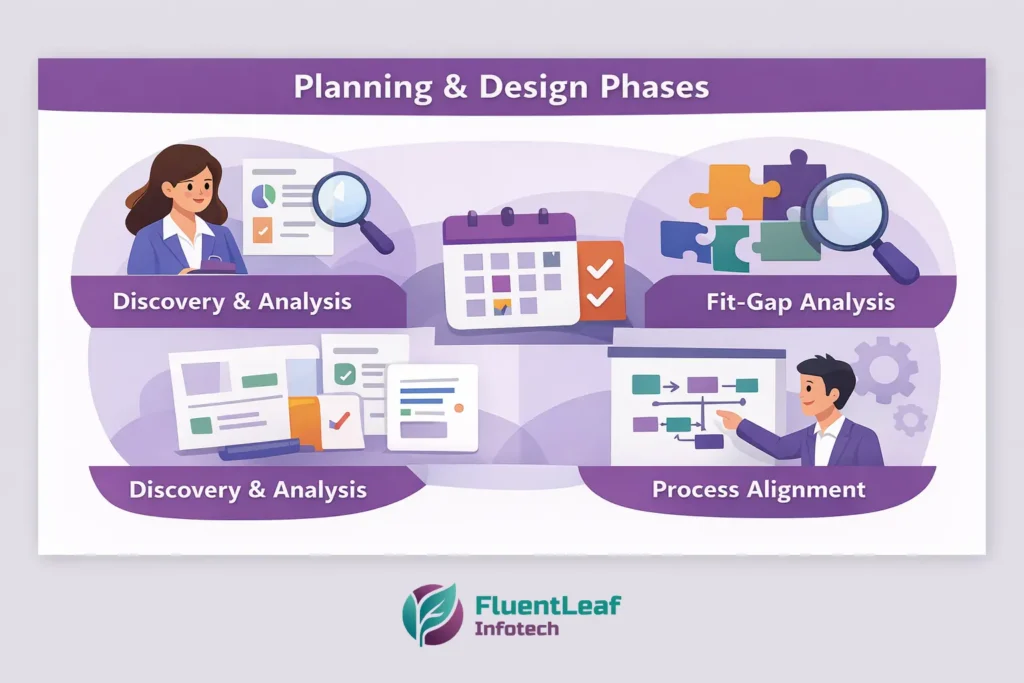
Discovery and Requirement Analysis
The Odoo implementation process starts with stakeholder discussions, workflow mapping, and current system analysis. Pain points, reporting needs, and operational gaps are identified early to avoid rework later.
Project Scope and Implementation Planning
A clear scope is defined covering modules, deliverables, timelines, and responsibilities. Proper planning reduces scope creep and ensures predictable delivery.
This stage typically produces:
- module list
- milestone plan
- responsibility matrix
- success criteria
Fit-Gap Analysis in Odoo
Fit-gap analysis maps business requirements against standard Odoo features. The goal is to maximize configuration and minimize customization.
Outputs include:
- standard feature coverage
- configuration needs
- justified customization areas
Process Alignment with Odoo Best Practices
Instead of replicating legacy workflows, businesses are guided to align with Odoo best practices wherever practical. Small workflow adjustments often reduce long-term maintenance and upgrade risks.
Phase 2: Implementation and Validation Phases
This is the execution stage of the Odoo ERP implementation lifecycle where the system is configured, built, and validated.
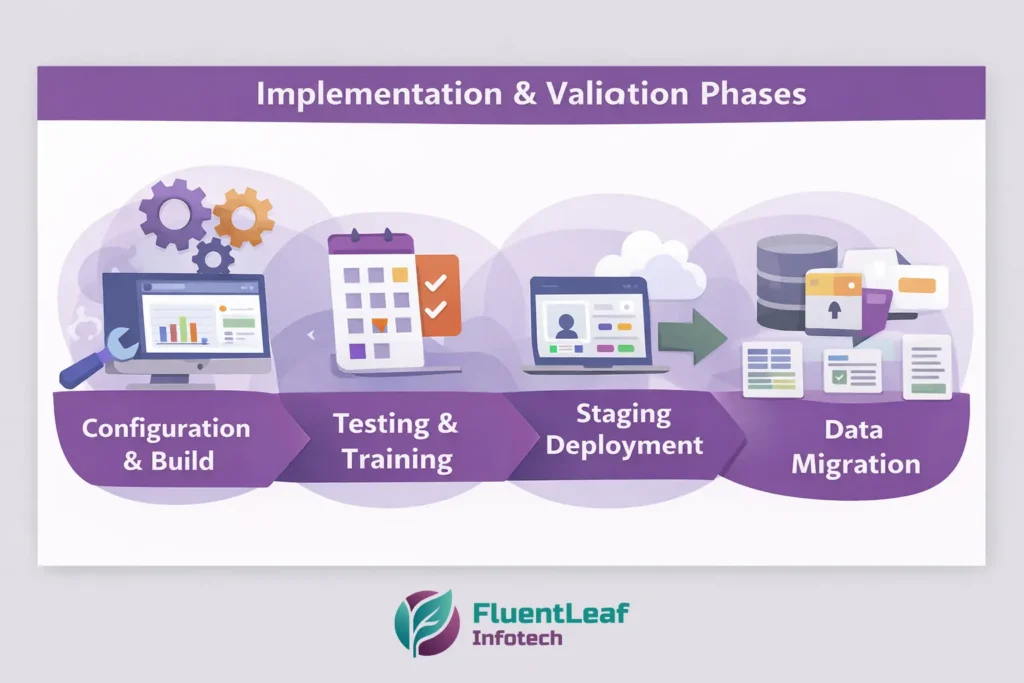
Odoo Configuration and Customization
Modules are configured, user roles are defined, workflows are set, and required customizations or integrations are developed. Work is usually delivered in iterative cycles with review checkpoints.
Testing and User Acceptance Validation
Testing ensures the configured Odoo system works correctly under real scenarios. This includes functional testing, workflow testing, and User Acceptance Testing (UAT).
Proper validation significantly reduces go-live risk.
Staging Deployment
A staging environment is created to mirror production. This allows safe testing, demos, and user practice without impacting live operations.
Odoo Training and User Enablement
Role-based Odoo training is delivered to admins and end users. Hands-on exercises improve confidence and increase adoption speed after go-live.
Data Migration Preparation
Data is cleaned, formatted, and tested using Odoo import templates. Trial migrations are performed before final production migration to ensure accuracy.
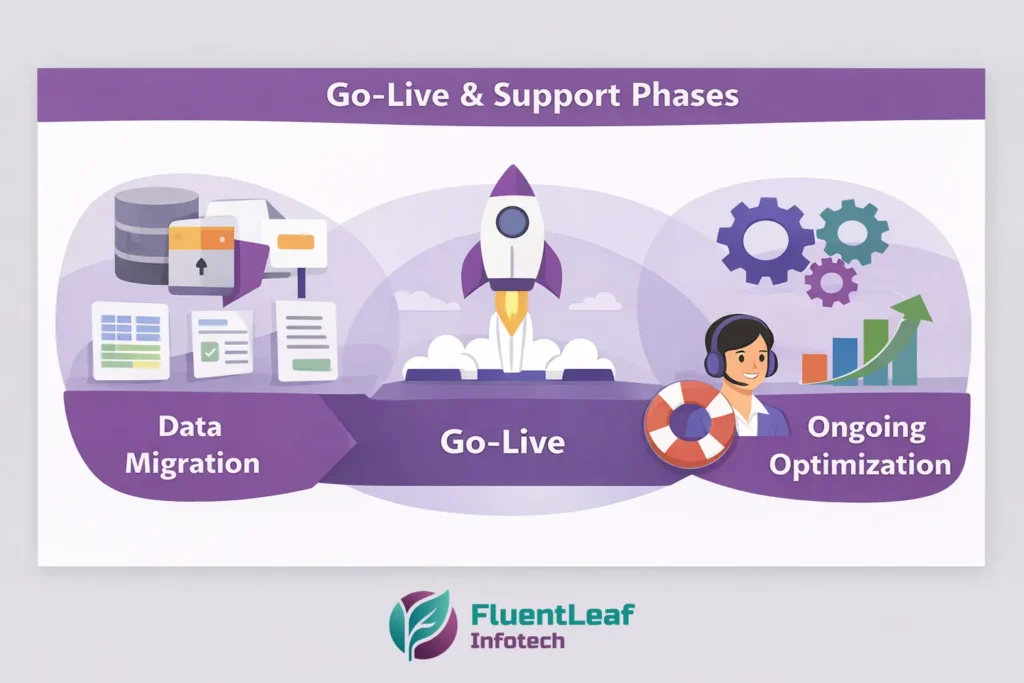
Phase 3: Go-Live and Support Phases
This phase moves Odoo into live business operations and ensures post-launch stability.
Go-Live Preparation Checklist
Before Odoo go-live, teams complete final checks including configuration review, data validation, user readiness, and cutover planning.
A structured go-live checklist helps prevent operational disruption.
Production Go-Live
The production Odoo database is launched and final data is imported. Live transactions begin with controlled monitoring by the implementation team.
Hypercare Support After Go-Live
Immediately after go-live, a hypercare window is maintained where experts remain on standby to resolve user issues and edge cases quickly. This stabilizes early adoption.
Ongoing Odoo Support and Optimization
After stabilization, continuous improvement follows through enhancements, workflow tuning, and new module rollouts as the business grows.
Odoo Version Upgrades and Lifecycle Management
Odoo releases new versions regularly with performance, feature, and security improvements. Planned upgrades ensure the system remains modern and efficient.
📞 Contact us today to get started on your Odoo success journey!