
Introduction
Odoo is a powerful, all-in-one ERP platform that helps businesses manage everything from sales and accounting to inventory, manufacturing, HR, and customer relationships. However, the real value of Odoo is unlocked only when admins, users, and teams are properly trained, hence quality Odoo Training is non-negotiable.
This beginner’s guide explains what Odoo training is, who needs it, and how structured training can ensure successful adoption across your organization.
Why Odoo Training Matters
Odoo is highly flexible and modular. While this flexibility is a major advantage, it also means that users can feel overwhelmed without guidance. Proper training:
- Reduces implementation risks and user resistance
- Improves productivity and data accuracy
- Ensures teams use Odoo as intended, not as a basic tool
- Maximizes ROI from your ERP investment
Training is not just a one-time activity; it’s a continuous process that evolves as your business grows.
Who Needs Odoo Training?
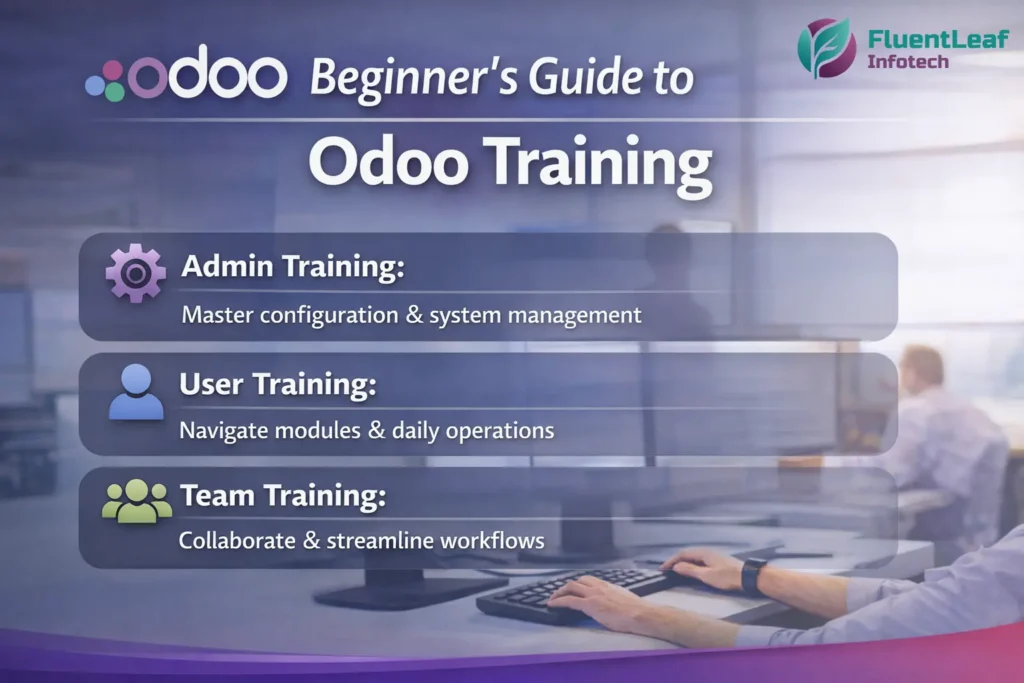
Odoo training typically falls into three categories: Admins, End Users, and Teams/Departments. Each group has different learning needs.
Odoo Training for Admins
Admins are the backbone of any Odoo system. They manage configurations, users, access rights, and often act as the first level of support.
Key Topics for Admin Training
- Odoo architecture and module overview
- User management and access control
- Company settings and configurations
- Workflow customization and automation basics
- Data import, export, and validation
- System maintenance and troubleshooting
Why Admin Training Is Critical
A well-trained admin can:
- Adapt Odoo to changing business needs
- Reduce dependency on external consultants
- Ensure system stability and security
- Support internal users efficiently
Admin training lays the foundation for long-term success with Odoo.
Odoo Training for End Users
End users interact with Odoo daily. Their comfort and confidence directly impact system adoption.
What End Users Should Learn
- Navigating the Odoo interface
- Module-specific training (Sales, Purchase, Accounting, Inventory, HR, etc.)
- Day-to-day operational workflows
- Data entry best practices
- Reports and dashboards relevant to their role
Benefits of User Training
- Faster onboarding and fewer errors
- Higher acceptance and reduced resistance to change
- Consistent and reliable business data
- Improved operational efficiency
User training should be practical, role-based, and focused on real business scenarios.
Odoo Training for Teams & Departments
Departments use Odoo collaboratively, which makes team-level training essential.
Department-Focused Training Areas
- End-to-end workflows across teams
- Inter-department dependencies
- Approval flows and responsibilities
- Reporting and performance tracking
- Best practices for collaboration in Odoo
Why Team Training Matters
When teams are trained together:
- Processes become aligned across departments
- Miscommunication and duplicate work are reduced
- Odoo becomes a single source of truth
- Cross-functional efficiency improves
Team training ensures that Odoo supports the entire business, not just individual roles.
Types of Odoo Training
Depending on your business needs, Odoo training can take different forms:
- Functional Training – Focused on business processes and modules
- Technical Training – For developers and advanced admins
- Role-Based Training – Tailored to specific job roles
- Onsite or Remote Training – Flexible delivery methods
- Post-Go-Live Training – Ongoing support after implementation
A blended approach often works best.
When Should You Invest in Odoo Training?
- Before implementation (to set expectations)
- During implementation (to support adoption)
- After go-live (to optimize usage)
- When adding new modules or users
Training should evolve alongside your Odoo system.
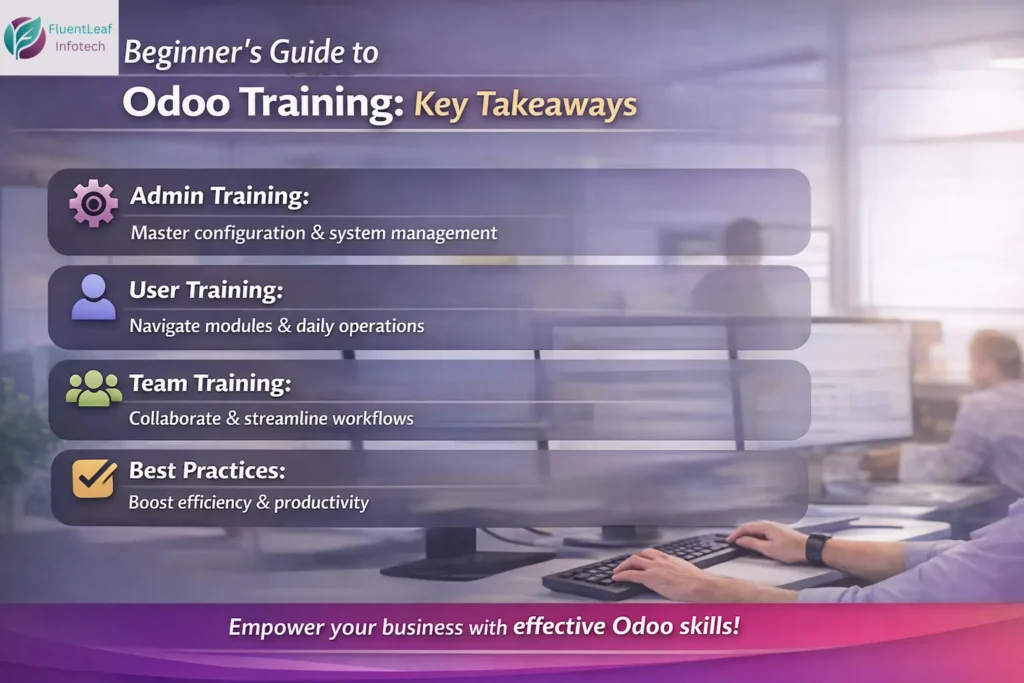
Best Practices for Effective Odoo Training
- Customize training to your business workflows
- Keep sessions interactive and hands-on
- Document processes and standard operating procedures
- Provide refresher sessions periodically
- Combine training with real-life use cases
Final Thoughts
Odoo is not just software; it’s a business transformation tool. Without proper training, even the best ERP implementation can fail to deliver value.
By investing in structured Odoo training for admins, users, and teams, businesses can ensure smoother adoption, higher efficiency, and long-term success.
If you’re starting your Odoo journey or looking to improve system usage, the right training strategy can make all the difference.
Need help with Odoo training or implementation? A structured approach tailored to your business can help you unlock the full potential of Odoo.
📞 Contact us today to get started on your Odoo success journey!